The illusion of personalisation
Email platforms have spent years adding “personalisation.” In most cases, that means:
- Adding a first name
- Dropping in a company name
- Putting people into broad segments
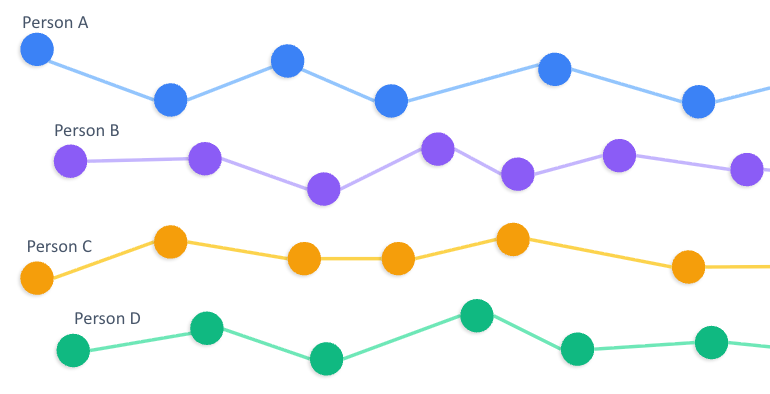
It looks personalised. It often isn’t relevant. Two people can be at completely different stages—and still receive the exact same email.
Everyone gets the same journey
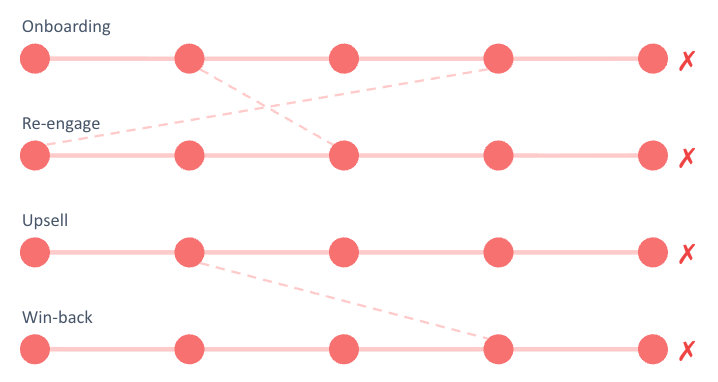
Most automation works like this: you design a sequence, and everyone goes through it.
- Day 1: Welcome email
- Day 2: Feature highlight
- Day 5: Case study
- Day 7: Offer
It’s predictable—and it doesn’t adapt. It doesn’t matter if someone has already completed key actions, is stuck on a step, or has lost interest. They still get the same emails.
Automation becomes noise
Because of this, automated emails tend to feel repetitive, generic, and easy to ignore. People learn the pattern quickly—and once they do, they stop paying attention.
This problem is getting worse
Inbox competition is up. People scan faster than ever. AI tools are starting to summarise emails before they’re fully read. If your message isn’t immediately relevant, it doesn’t get read.
The real issue
The problem isn’t automation. The problem is that automation still treats people like groups.
A different approach
What if every email were written for one person—not thousands? Not templated. Not slightly customised. Actually written for that individual.